

Flexible Busbars
Multilayer busbars in automotive grade: for optimal energy transfer in the most demanding applications
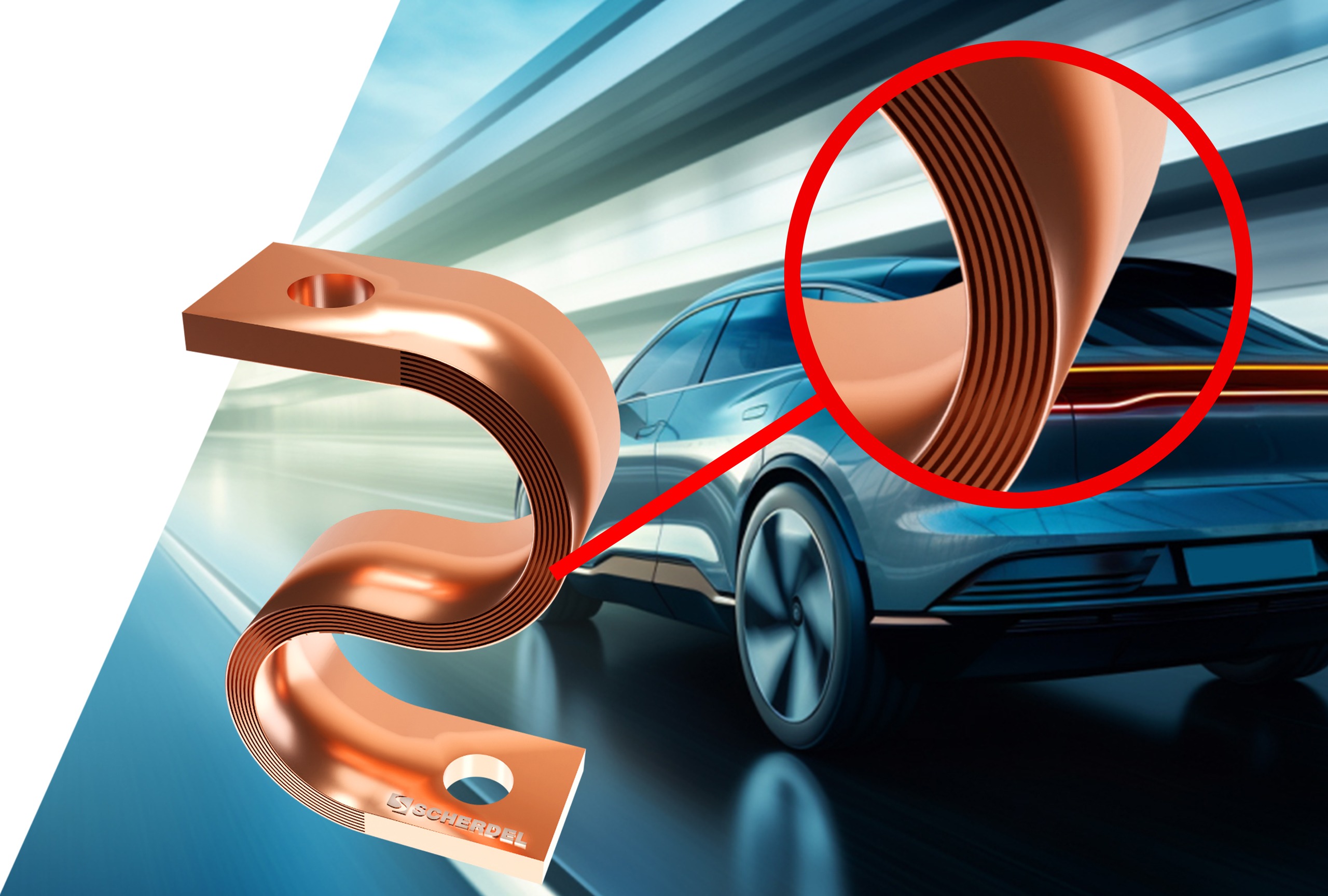
Thermally and mechanically stressed system connections? Problems with vibrations in the electric motor? Defective busbar connections? Tolerance problems with power electronics assemblies and AC/DC connections? Or excessive costs for busbars due to a non-production-optimized design?
SCHERDELs got a solution for all those engineering challenges: Flexible Busbars.
Laminated copper sheets that offer you flexibility in your connections. They are often used as battery module connectors, as an interface between inverters and e-drive and other busbar applications for e-mobility.
SCHERDEL focuses on the mass production of flexible busbars for automotive applications in small to large quantities. Designed according to your needs, of course, using our expertise in engineering, simulation, testing and in-house prototype construction!
Flexibility
Key advantage of our flexible multilayer busbar
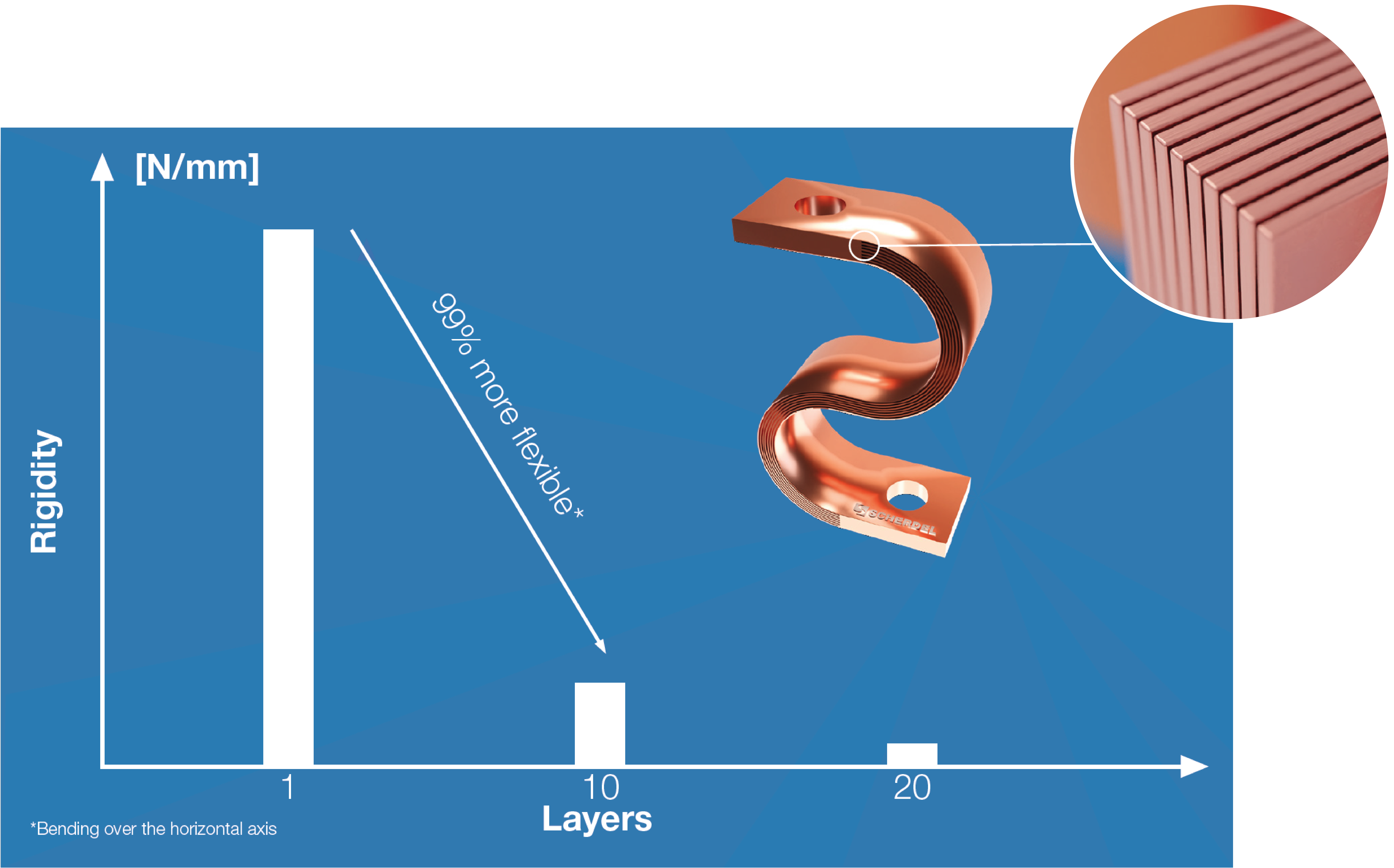
Our busbars achieve significantly more flexibility thanks to the multi-layered and carefully coordinated structure of thin layers of copper. As the diagram clearly shows, if you divide a rigid busbar into 10 layers with the same cross-section, the flexibility increases by 99%. This flexibility is essential for particularly demanding applications. In the automotive sector, for example. But also for many other applications!


In detail, our busbar technology convinces particularly because:

1. Our busbar can compensate for system movements
The multilayer structure and the high-precision manufacturing methods with particularly careful and precise contact surfaces or surfaces at the busbar end ensure that system movements are reliably compensated, and the electrical current is reliably transmitted under all conditions.
Regardless of whether…
- … these system movements are caused by thermal expansion due to ohmic heating (i.e., by the transmitted current itself),
- … by changing ambient temperatures,
- … or because the components move against each other due to external movements – e.g., during the drive of an electric vehicle (vibrations, shocks, or impacts).

2. Our flexible busbars ensure tolerance compensation of individual components
Today’s high-tech, densely packed assemblies are prone to run into a tolerance stack up.
The flexibility of our busbars allows the sometimes significant cumulative tolerance values of interconnected assemblies to be reliably compensated. Our busbars ensure that the individual components remain stably connected even with significant dimensional deviations – and that the current to be transmitted always flows reliably and precisely as specified.
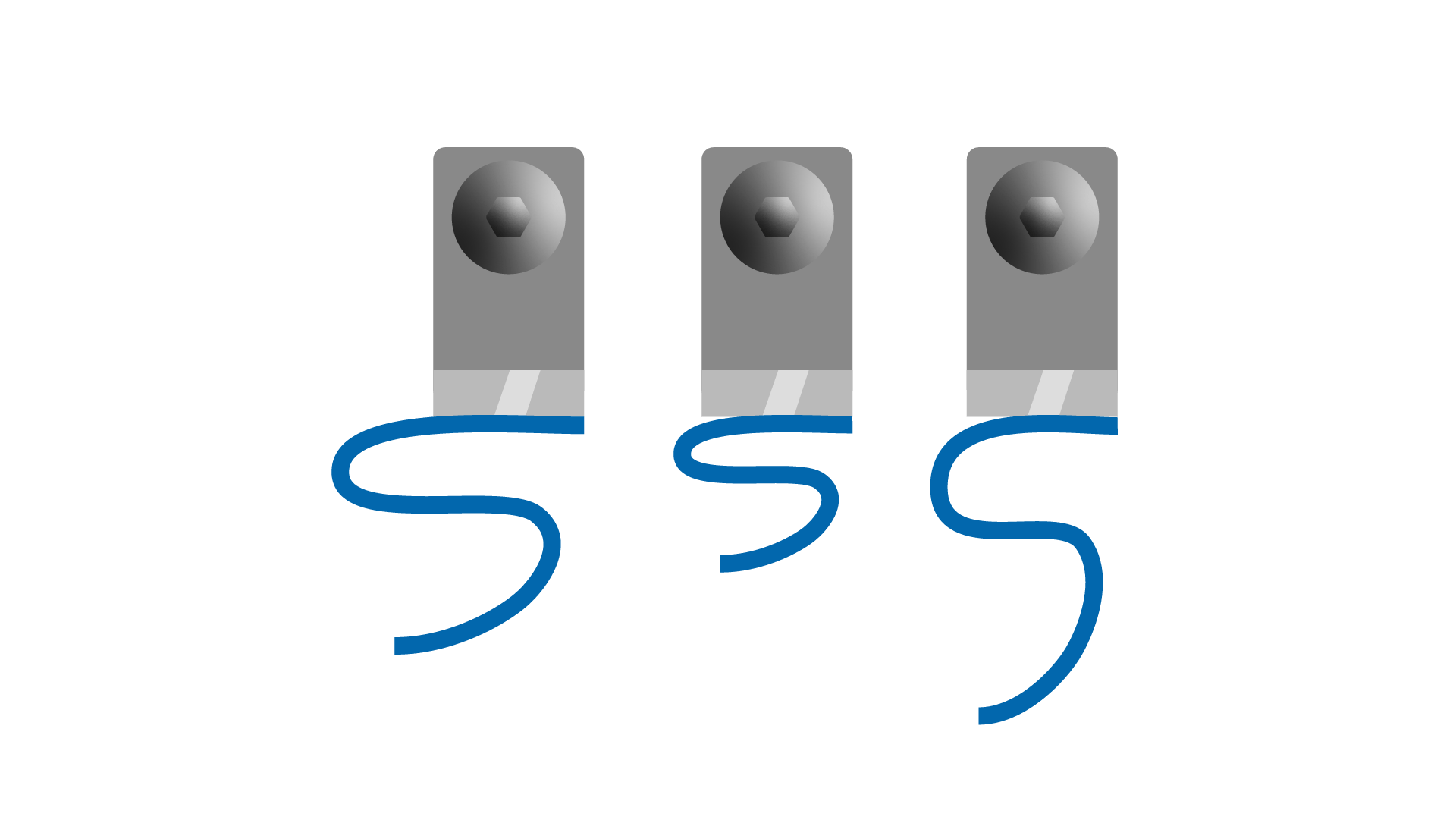
3. Our busbar also allows for comprehensive same-part strategy
Thanks to the flexibility of our busbars, it is possible to use one busbar model for different installation dimensions and to mount it in different applications. This saves costs and also simplifies production!
Applications for our flexible busbars
Our busbars are suitable for a wide range of applications. Among other things as:
Busbar
EMC-Filter Interface
Battery Module Connector
E-Motor Interface
PCB (Printed Circuit Board) Connector
FAQ
Frequently Asked Questions about our busbars
Our flexible busbars are characterized by their flexibility and reliable power transmission under all circumstances, which is achieved through their special design and the use of advanced manufacturing technologies and high-quality materials.
Our busbars are primarily used in the automotive industry, especially in electric vehicles, as well as in energy technology and industrial automation.
Yes, our Flexible Busbars can be specially configured to meet specific technical requirements.
Our busbars are available in different lengths and with different coating options to ensure optimum performance under different operating conditions.
Engineering services involved in the development of our busbars
- Conversion of solid busbars to flexible busbars
- Mechanical design
- Electrical layout
- FE-Simulations
- Mechanical and electrical testing
Techniques used in busbar manufacturing
- Stamping / bending techniques
- Laser welding and resistance welding
- Diffusion welding
- Surface coatings
- Press-fit technology
More information?
Contact us now!
Are you interested in our flexible busbars? Would you like to find out more about how we at SCHERDEL can meet your specific busbar requirements?
Simply fill out the form below, and a member of our team will contact you shortly to provide comprehensive information.